Lunes, Enero 9, 2017

STORY OF REHOBOAM


REHOBOAM


rehoboam went to Shechem: for all Israel were come to Shechem to make him king. And it came to pass, when Jeroboam the son of Nebat, who was yet in Egypt, heard of it, (for he was fled from the presence of king Solomon, and Jeroboam dwelt in Egypt;) that they sent and called him. And Jeroboam and all the congregation of Israel came, and spake unto Rehoboam, saying, Thy father made our yoke grievous: now therefore make thou the grievous service of thy father, and his heavy yoke which he put upon us, lighter, and we will serve thee. And he said unto them, Depart yet for three days, then come again to me. And the people departed.


JEROBOAM SON OF NEBAT


AHAZIAH, suceeded Rehoboam


JEHORAM


Ahaziah after a brief and wicked reign of one year, he was slain by Jehu


Athaliam daughter of Ahab and Jezebel


Joash saved by Athaliah and Jehoiada


Ahab usurped the throne of Joash


jezebel, wife of Ahab


rEHOBOAM'Ss son Ahaziah succeeded him at Jerusalem B.C. 885, but formed an alliance with Jehoram, king of Israel, and after a brief and wicked reign of one year, he was slain by Jehu, the great instrument of divine vengeance on the idolaters. Of his numerous sons, the infant Joash alone was spared by Athaliah, the daughter of Ahab and Jezebel, who usurped authority in the name of the infant king, until she was overthrown by the high priest Jehoiada. The usurpations of this queen have furnished a subject for one of the finest tragedies of Racine. Jehoiada restored the temple worship, and instituted many other reforms, having supreme power, like Dunstan over the Saxon kings, when they were ruled by priests. His death left Judah under the dominion of the patriarchal rulers (the princes of Judah), who opposed all reforms, and even slew the son of Jehoida, Zechariah the prophet, between the altar and the temple. It would seem that Joash ruled wisely and benignantly during the life of Jehoiada, by whom he was influenced—a venerable old man of 130 years of age when he died. After his death Joash gave occasion for reproach, by permitting or commanding the assassination of Zechariah, who had reproved the people for their sins, and his country was invaded by the Syrians under Hazaal, and they sent the spoil of Jerusalem to Damascus. Joash reigned in all forty years, and was assassinated by his servants


aMAZIAH 


His son Amaziah succeeded him B.C. 839, and reigned twenty-nine years. He was on the whole a good and able 
prince, and gained great victories over the Edomites whom he attempted to reconquer. He punished also the murderers of his father, and spared their sons, according to the merciful provision of the laws of Moses. But he worshiped the gods of the Edomites, and was filled with vainglory from his successes over them. It was then he rashly challenged the king of Israel, who replied haughtily: “The thistle that was in Lebanon sent to the cedar that was in Lebanon, saying, give thy daughter to my son to wife, and there passed by a wild beast that was in Lebanon, and trode down the thistle.” “So thou hast smitten the Edomites, and thine heart lifteth thee up to boast. Abide now at home; why shouldst thou meddle to thine hurt, that thou shouldst fall, even thou and Judah with thee.”But Amaziah would not heed, and the two kings encountered each other in battle, and Judah suffered a disastrous defeat, and Joash, the king of Israel, came to Jerusalem and took all the gold and silver and all the sacred vessels of the temple and the treasures of the royal palace, and returned to Samaria. After this humiliation Amaziah reigned, probably wisely, more than fifteen years, until falling into evil courses, he was slain in a conspiracy, B.C. 810, and his son Uzziah or Azariah, a boy of sixteen, was made king by the people of Judah

Uzziah

REHOBOAM AND JEROBOAM SONS OF SOLOMON

THE STORY AFTER THE REIGN OF KING SOLOMON


REHOBOAM

JERUSALEM CAPITAL OF JUDAH

The government of Solomon, nevertheless had proved arbitrary, and his public works oppressive. The monarch whom he most resembled, in his taste for magnificence, in the splendor of his reign, and in the vexations and humiliations of his latter days, sowed the seeds of future revolutions. So Solomon prepared the way for rebellion, by his grievous exactions. Under his son Rehoboam, a vain and frivolous, and obstinate young man, who ascended the throne B.C. 975, ]the revolt took place. He would not listen to his father's councillors, and increased rather than mitigated the burdens of the people. And this revolt was successful: ten tribes joined the standard of Jeroboam, with 800,000 fighting men. Judah remained faithful to Rehoboam, and the tribe of Benjamin subsequently joined it, and from its geographical situation, it remained nearly as powerful as the other tribes, having 500,000 fighting men. But the area of territory was only quarter as large.


JEROBOAM


SHECHEM CAPITA CITY OF NORTHERN KINGDOM

The Jewish nation is now divided. The descendants of David reign at Jerusalem; the usurper and rebel Jeroboam reigns over the ten tribes, at Shechem.

For the sake of clearness of representation we will first present the fortunes of the legitimate kings who reigned over the tribe of Judah

Rehoboam reigned forty-one years at Jerusalem, but did evil in the sight of the Lord. In the fifth year of his reign his capital was rifled by the king of Egypt, who took away the treasures which Solomon had accumulated. He was also at war with Jeroboam all his days. He was succeeded by his son Abijam, whose reign was evil and unfortunate, during which the country was afflicted with wars which lasted for ninety years between Judah and Israel. But his reign was short, lasting only three years, and he was succeeded by Asa, his son, an upright and warlike prince, who removed the idols which his father had set up. He also formed a league with Ben-Hadad, king of Syria, and, with a large bribe, induced him to break with Baasha, king of Israel. His reign lasted forty years, and he was succeeded by his son Jehoshaphat, B.C. 954. Under this prince the long wars between Judah and Israel terminated, probably on account of the marriage of Jehoram, son of Jehoshaphat, with the daughter of Ahab, king of Israel—an unfortunate alliance on moral, if not political grounds. Jehoshaphat reigned thirty-five years, prosperously and virtuously, and his ships visited Ophir for gold as in the time of ]Solomon, being in alliance with the Phœnicians. His son Jehoram succeeded him, and reigned eight years, but was disgraced by the idolatries which Ahab encouraged. It was about this time that Elijah and Elisha were prophets of the Lord, whose field of duties lay chiefly among the idolatrous people of the ten tribes. During the reign of Jehoram, Edom revolted from Judah, and succeeded in maintaining its independence, according to the predictions made to Esau, that his posterity, after serving Israel, should finally break their yoke


HEBREW KINGDOM DURING SOLOMON


HEBREW KINGDOM DURING SOLOMON


The reign of Solomon is most distinguished for the magnificent Temple he erected in Jerusalem, after the designs furnished by his father, aided by the 
friendship of the Phœnicians. This edifice, “beautiful for situation—the joy of the whole earth,” was the wonder of those times, and though small compared with subsequent Grecian temples, was probably more profusely ornamented with gold, silver, and precious woods, than any building of ancient times.  its architectural appearance, in much ingenuity has been expended in conjectures, which are far from satisfactory. It most probably resembled an Egyptian temple, modified by Phœnician artists. It had an outer court for worshipers and their sacrifices, and an inner court for the ark and the throne of Jehovah, into which the high priest alone entered, and only once a year. It was erected upon a solid platform of stone, having a resemblance to the temples of Paestum. The portico, as rebuilt, in the time of Herod, was 180 feet high, and the temple itself was entered by nine gates thickly coated with silver and gold. The inner sanctuary was covered on all sides by plates of gold, and was dazzling to the eye. It was connected with various courts and porticoes which gave to it an imposing appearance. Its consecration by Solomon, amid the cloud of glories in which Jehovah took possession of it, and the immense body of musicians and singers, was probably the grandest religious service ever performed. That 30,000 men were employed by Solomon, in hewing timber on Mount Lebanon, and 70,000 more in hewing stones, would indicate a very extensive and costly edifice. The stones which composed the foundation were of extraordinary size, and rivaled the greatest works of the Egyptians. The whole temple was overlaid with gold—a proof of its extraordinary splendor, and it took seven years to build it

The palace of Solomon must also have been of great magnificence, on which the resources of his kingdom were employed for thirteen years. He moreover built a palace for his wife, the daughter of Pharaoh, composed of costly stones, the foundation-stones of which were fifteen feet ]in length, surrounded with beautiful columns. But these palaces did not include all his works, for the courts of the temple were ornamented with brazen pillars, with elaborate capitals, brazen seas standing upon bronze oxen, brazen bases ornamented with figures of various animals, brazen layers, one of which contained forty baths, altars of gold, tables, candelabras, basins, censers and other sacred vessels of pure gold,—all of which together were of enormous expense and great beauty.

During the execution of these splendid works, which occupied thirteen years or more, Solomon gave extraordinary indications of wisdom, as well as signs of great temporal prosperity. His kingdom was the most powerful of Western Asia, and he enjoyed peace with other nations. His fame spread through the East, and the Queen of Sheba, among others, came to visit him, and witness his wealth and prosperity. She was amazed and astonished at the splendor of his life, the magnificence of his court, and the brilliancy of his conversation, and she burst out in the most unbounded panegyrics. “The half was not told me.” She departed leaving a present of one hundred and twenty talents of gold, besides spices and precious stones; and he gave, in return, all she asked. We may judge of the wealth of Solomon from the fact that in one year six hundred and sixty-six talents of gold flowed into his treasury, besides the spices, and the precious stones, and ivory, and rare curiosities which were brought to him from Arabia and India. The voyages of his ships occupied three years, and it is supposed that they doubled the Cape of Good Hope. All his banqueting cups and dishes were of pure gold, and “he exceeded all the kings of the earth for riches and wisdom,” who made their contributions with royal munificence. In his army were 1,400 chariots and 12,000 horses, which it would seem were purchased in Egypt.


Intoxicated by this splendor, and enervated by luxury, Solomon forgot his higher duties, and yielded to the fascination of oriental courts. In his harem 
were 700 wives, princesses, and 300 concubines, who turned his heart to idolatry. In punishment for his apostasy, God declared that his kingdom should be divided, and that his son should reign only over the single tribe of Judah, which was spared him for the sake of his father David. In his latter days he was disturbed in his delusions by various adversaries who rose up against him—by Hadad, a prince of Edom, and Rezon, king of Damascus, and Jeroboam, one of his principal officers, who afterward became king of the ten revolted tribes. Solomon continued, however, to reign over the united tribes for forty years, when he was gathered to his fathers.


HEBREW KINGDOM DURING KING DAVID


KINGDOM OF DAVID


KING DAVID

David, the greatest warrior that his nation has produced. In successive campaigns, extending over thirty years, he reduced the various Canaanite nations that remained unconquered—the Amalekites, the Moabites, the Philistines, the Edomites, and the Syrians of Tobah. Hiram, king of Tyre, was his ally. 

KING DAVID conquerred the amalekites


the philistines


the Edomites descendants of Esau

kingdom of King David

His kingdom extended from the borders of Egypt to the Euphrates, and from the valley of Cœlo-Syria to the eastern gulf of the Red Sea. But his reign, if glorious and successful, was marked by troubles. He was continually at war; his kingdom was afflicted with a plague as the punishment for his vanity in numbering the people; his son Amnon disgraced him; Absalom, his favorite son, revolted and was slain; he himself was expelled for a time from his capital.


Absalom, rebel son of King David 

David is memorable for his character, and his poetry, his romantic vicissitudes of life, and as the founder of a dynasty rather than for his conquests over the neighboring nations. His magnificent virtues blended with faults; his piety in spite of his sins, his allegiance to God, and his faith in his promises invest his character with singular interest. In his Psalms he lives through all the generations of men. He reigned thirty-three years at Jerusalem, and seven at Hebron, and transmitted his throne to Solomon—his youngest child, a youth ten years of age, precocious in wisdom and culture.


sOLOMON, SON OF kING dAVID


Expectation of the Messiah.


 Expectation of the Messiah.


Having been freed from the empire of the Greek kings, the Hebrews did not have long to make use of their freedom. 


Roman empire conquerred theworld


                  Antipater


The Romans, having conquered the whole known world, also subjugated the Jews (64 B.C.). They placed over Palestine the procurator Antipater from the tribe of Esau, an Idumean (or Edomite). He very cleverly secured the confidence of the Romans, but was soon poisoned.

                                                         Herod the Great

After him, his son Herod, called Herod the Great, was appointed governor of Galilee. He was a suspicious, brutal and cunning man. He also, like his father, skillfully gained the confidence of the Roman authorities and was declared King of the Jews. 


                                                  Jerusalem

In order to find favor among the Jews, King Herod restored the Jerusalem Temple. Having received the title of King, he was still subordinate to Caesar, the Roman Emperor. From the time that the Jews came under Roman power, they were always subject to a Roman ruler, a deputy of the Roman Emperor. The Jews were allowed to keep their Sanhedrin, their council of high priests and elders of the people; but the power of the Sanhedrin was strictly limited. The Sanhedrin, for example, could not impose the death penalty without the permission of the Roman ruler, to whom belonged the highest authority in Israel.
The worldwide control of the Roman empire shook paganism to its foundations. 


                              city of Rome
Rome was the capital of the world and there gathered the scholars, writers, merchants and other representatives of all the nations. Each one brought with him his own pagan faith. These people, seeing the endless variety of pagan idol-deities, became convinced that all these pagan gods were devised by the people themselves.
Many of the pagans began to lose faith and hope in the future. In order to seek blissful oblivion, they began to indulge in every sort of amusement. Some, falling into despondency, ended their lives by suicide.
But the best of them, observing that the world was headed toward destruction, nevertheless maintained the hope that from somewhere would come a Saviour, if not from among the people, then from above. The Jews, dispersed throughout all the world after their captivity in Babylon and other later captivities, spread the news about the imminent coming of the Saviour of the world. Therefore, the gaze of the best people in the pagan world began to turn to the east, to Palestine.
Among the Romans and other pagan people there arose the general belief that in the East there would soon appear a powerful king who would subjugate the entire world.
In Palestine itself, among the Jews, the expectation of the Messiah was especially intense. Everyone felt that the time was coming for the fulfillment of the prophecies and the salvation of Israel.
The prophecies of the Prophet Daniel about the date of the appearance of Christ were especially precise. He foretold that after a period of seventy weeks of years came to an end, a fourth great kingdom would arise during which the Saviour would arrive. This was the exact specification of the time of the advent of Christ.
Upon the appearance of every prominent preacher, everyone involuntarily asked if he were the Christ. Even the semi-pagan Samaritans hoped that soon would come Christ the Saviour, Who would resolve all the quarrelsome questions between them and the Jews concerning the faith. Unfortunately, not only the pagans, but also the Jews themselves mistakenly imagined what Christ would be like. They did not picture Him as the Prophet Isaiah and other prophets represented Him, as one that would bear our sins, suffer for us and, though innocent, be condemned to death. The Jews had no idea that Christ the Saviour would come to earth for the purpose of teaching people, through His example, word, deeds, and suffering, to love God and each other. They desired to see Christ not like this, but rather with worldly power and glory. Therefore, they thought that Christ would come in worldly glory and would be the earthly king over the Jewish people. He would free the Jews from the power of Rome and would subjugate the whole world, and the Jews would reign over all the peoples of the earth.
Only a few devout and righteous people awaited Christ with humility, faith and love. They expected the true Saviour of the world, Who would come to deliver people from enslavement to sin and the power of the Devil. He would "trample on the head of the serpent," as God said to the first people in Paradise, to save people from eternal death and to open the gates to the Kingdom of Heaven for eternal blessed life with God.
When the time came, God gave the promised Saviour of the world, His Only-begotten Son, Jesus Christ. The Son of God dwelt in the Holy Virgin Mary, and by the action of the Holy Spirit, received from her a human body and soul; that is, He was born from the Most-holy Virgin Mary and became God Incarnate.
The birth of Jesus Christ occurred in the days when Herod the Great, the Edomite, reigned over the Jews, in the time of the Roman Emperor Augustus.
Palestine.
The land of Palestine, upon whose soil our Saviour lived, is comprised of a comparatively small strip of land, about 150 miles long and 80 miles wide, situated along the eastern coast of the Mediterranean Sea.
In the north of Palestine, on the slopes of Mt. Lebanon, lies Galilee. Picturesque hills, green pastures, and innumerable gardens make Galilee the most beautiful part of Palestine. Its chief adornment is the Sea of Galilee, which is also known as the Lake of Gennesaret or Tiberias. It is more than twelve miles in length, and a little more than five miles in width. At the time of the Saviour, the shores of this sea were covered with lush vegetation. Palm trees were growing there, along with vineyards, fig trees, almond trees, and flowering oleander. Beautiful cities, Capernaum, Tiberias, Chorazin, and Bethsaida, situated on the banks of this sea, were not large, but densely populated. The inhabitants led simple and industrious lives. They cultivated every plot of land, and engaged in commerce and various trades, the chief of which was fishing.
To the south of Galilee lies Samaria. The inhabitants of Samaria, the Samaritans, were in constant conflict with the Jews. They even built themselves a separate temple on Mount Gerizim in order to avoid going to Jerusalem.
The largest part of Palestine, to the south of Samaria, is Palestine at the Time of the Saviour called Judea. The western part of it is level plain, interrupted by small streams flowing into the Mediterranean Sea. This plain gradually rises toward the east and is bordered by the Judean hills; from ancient times it was famous for its fertility. The slopes of the Judean hills are dressed in green, covered with whole groves of olive trees; more distant and higher mountains become rockier and more dismal. Among these hills is the great city of Jerusalem, the capital of Judea and of allPalestine.
The largest river in Palestine is the Jordan. The Jordan begins in the mountains of Lebanon in the form of sparkling mountain streams. Downstream in the valley these streams form a single river which spills into and forms the Sea of Galilee. From this sea, the Jordan flows out in the form of a fast wide river with low, green banks; at that time this was called the Valley of the Jordan. Approaching Judea, the banks of the Jordanbecome higher and drier, composed of bare rocks, devoid of any vegetation. Only the backwaters along the Jordan are thickly covered with reeds. There crocodiles swim, and wild beasts hide. This was the Jordan desert in which John the Baptist lived and preached. At the end of its course, theJordan flows into a most wild and uninhabited country and empties into the Dead Sea.

Return of the Jews from Captivity in Babylon and the Construction of the Second Temple


Return of the Jews from Captivity in Babylon and the Construction of the Second Temple


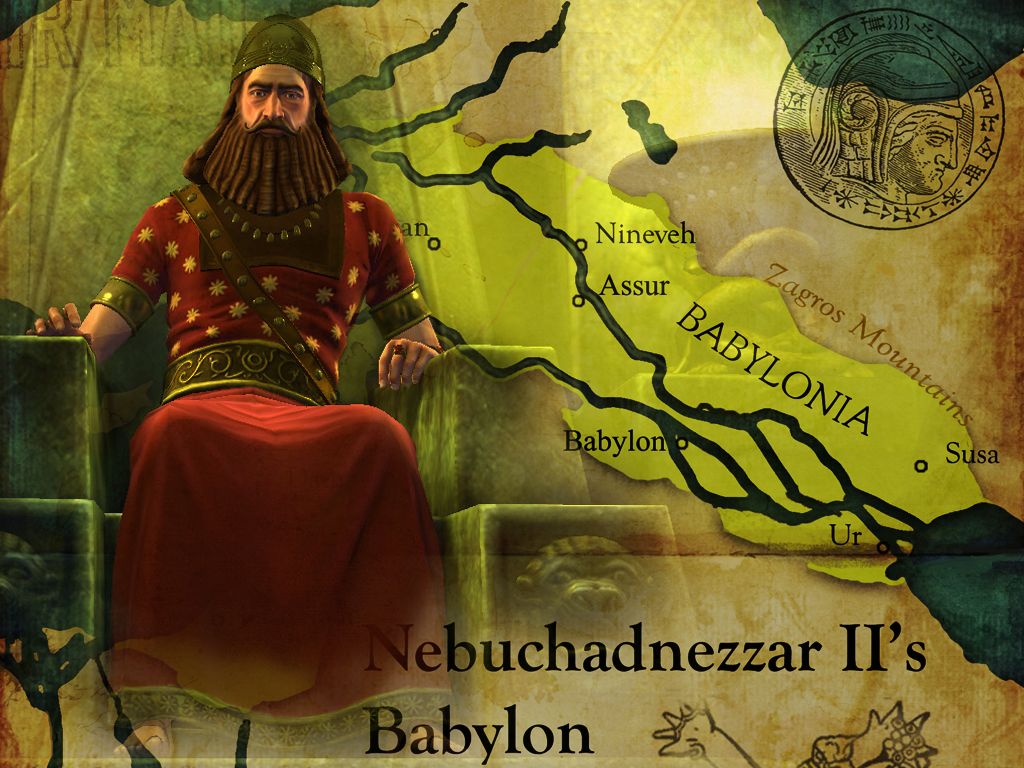
Jews were in captivity in Babylon

The Jews were in captivity in Babylon seventy years. The Persian King Cyrus, in the first year of his reign over Babylon, allowed the Jews to return from captivity to their fatherland and to build a Temple to the Lord in Jerusalem. Forty-two thousand Jews returned to their homeland. The Jews who remained in Babylon helped them with gold, silver and other necessities, and beyond that with rich donations to the Temple. The King returned the sacred vessels which were taken from the Temple of Solomon by Nebuchadnezzar.


Having returned to Jerusalem, the Jews first of all resumed sacrifices to the Lord God, and then, the next year, they laid the foundations for the new Temple. The Samaritans, having found out about it, expressed a desire to take part in the building of the Temple, but the Jews, in order to keep the services to God pure, refused them. After nineteen years the Temple was finished. The new Temple was not as rich and splendid as the Templeof Solomon. The old folk, remembering the splendor of the former Temple, wept over the fact that this second Temple was poorer and smaller than before.


But the Prophet Haggai, whom the Lord sent to the Jews, comforted them. He predicted that the glory of this latter Temple would be greater than that of the former because to this Temple would come the Desire of all nations, Christ the Saviour of the World (cf. Haggai 2:6-9).
The Prophet Zechariah foretold the triumphant entry of the Saviour into Jerusalem upon a colt, the foal of a donkey (cf. Zech. 9:9).
The Prophet Malachi prophesied that the advent of the Messiah was near and that before Him would be sent a Forerunner, that is a precursor like the Prophet Elijah, to prepare people to receive the Saviour (cf. Mal. 3:1, 4:5). Malachi was the last prophet of the Jews. After him for more than four hundred years, words of the prophets were not heard among the Hebrew people, until the appearance of the Forerunner of Christ, John the Baptist.


prophet Haggai


Prophet Daniel in the Lion’s Den.


Prophet Daniel in the Lion’s Den.


The Median-Persian Empire.


Darius, king of Persia


King Darius came to love Daniel and made him one of the three main rulers in his kingdom; the King thought to set him over the whole realm. Other important persons envied Daniel and decided to kill him. They knew that three times a day Daniel prayed to God, opening the window towardJerusalem. Therefore, they came to the King and asked him to establish a royal statute that within thirty days, whosoever shall ask a petition of any god or man, save the King, should be cast into a den of lions. The King agreed. But the Prophet Daniel, as before, did not cease to pray to God every day and beg His mercy. His enemies reported this to the King. Then Darius understood that he had been deceived, but he was unable to change his order, and he was compelled to permit Daniel to be thrown to the lions.


The next day, early in the morning, the King hurried to the lions’ den and cried, "Daniel, servant of the living God! Is thy God, whom you serve continually, able to deliver thee from the lions?" (Dan. 6:20).
Daniel answered him from the den, "O king! My God hath sent His angel, and hath shut the lions’ mouths, forasmuch as before Him innocency was found in me; and also before thee O king, have I done no hurt" (Dan. 6:21-22).
The King then commanded that they should take Daniel up out of the den, and they cast his accusers into the den of lions. Before they had even come to the bottom of the den, the lions seized them and broke all their bones in pieces.


                        kingdom of Persia

Then King Darius wrote a decree. I make a decree, that in every dominion of my kingdom men tremble and fear before the God of Daniel: for He is the living God, and steadfast forever, and His kingdom that which shall not be destroyed, and His dominion shall be even unto the end (Dan. 6:26).
The Prophet Daniel prospered in the reign of Darius, and in the reign of Cyrus the Persian. He made many predictions which were later fulfilled.


Prophet 
Daniel predicted the birth of Christ


Daniel predicted the birth of Christ the Saviour precisely in seventy weeks of years, that is, in 490 years. He predicted also that Christ would be put to death, and after Him would follow the destruction of the Temple and city and the cessation of the Old Testament sacrifices (Dan. 9:23-27).